
Truth-Telling
Reasons to adopt a belief are only good reasons if “they correctly describe reality” is the fundamental reason. Truth-telling, in other words.

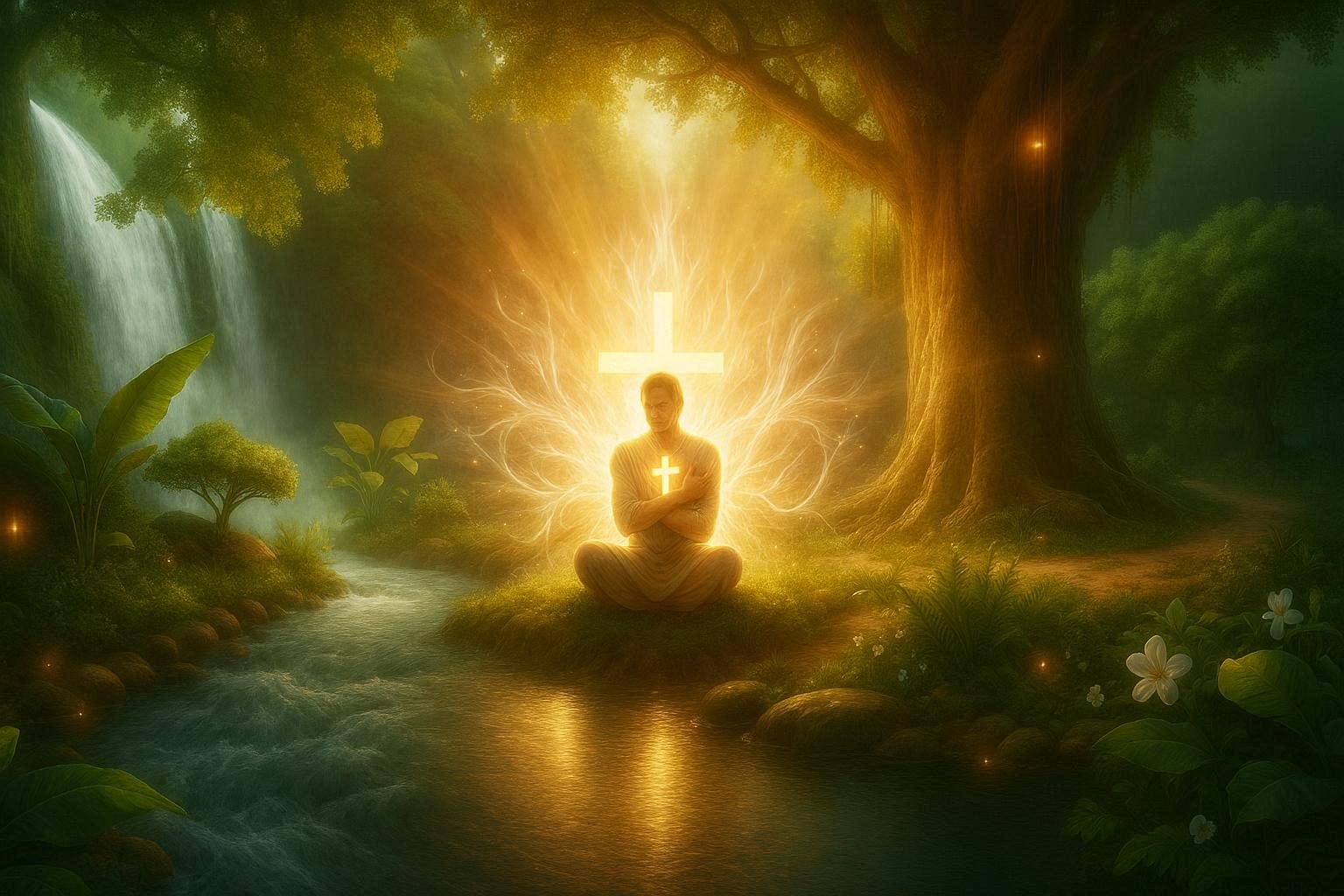
This is true, which is why some people experience difficulties with Christianity. The Gospel narratives and the stories of the Hebrew Bible do not align neatly with lived experience. When read literally, they often defy reason and observation, offering a cosmology and anthropology that modern consciousness, shaped by science and historical awareness, can no longer accept as factual. However, if we interpret them as symbolic or metaphorical accounts, as well as imaginative frameworks that illuminate our inner and outer realities, they can still profoundly speak to human existence. In that sense, they function less as historical records and more as meta-narratives through which we can explore the themes of consciousness, morality and transcendence.
When I write a story, I am not merely recounting events but inviting readers to share my vision and subjective interpretation of experience. How something is perceived, remembered and understood is as important as what happened. Every act of storytelling is thus an act of interpretation, framed by language, culture, and precedent. The metaphors I use are chosen because I expect them to resonate with readers familiar with the same or similar symbols. My perception is inevitably filtered through the lenses of tradition, upbringing and previous narratives. This is why, when a Christian asserts that Jesus is the son of God, a Hindu may readily agree — not because of conversion or assent to Christian dogma, but because, in Hindu cosmology, divinity is not the exclusive property of one figure, but an essence shared among all beings. The divergence lies not in the experience of the sacred, but in the frameworks we use to describe it.
What is often missing from reductive readings, whether literalist or purely sceptical, is the experiential dimension of transcendence. Thinkers such as Aristotle and Spinoza recognised that truth, beauty, unity and goodness are not merely the properties of objects, but transcendental qualities that point towards the divine itself. Encountering them provides a glimpse into a kind of ontological harmony and what lies beyond the merely empirical. William Blake recognised this when he said that the imagination is divine. For him, imagination was not fantasy or illusion, but the faculty through which the eternal enters the temporal. Therefore, even when religious and mythic stories are unbelievable as reports, they remain true as expressions of humanity’s imaginative apprehension of the divine.
This is why religion and philosophy, for that matter, have a relationship with poetry because all three try to speak about what exceeds straightforward description. They reach for forms of language that can hold paradox, depth of feeling, and intimations of transcendence at once. The poetic, religious, and philosophical imagination does not flee the material but imbues it with depth and presence.
Iain McGilchrist’s insight beautifully extends this thought: “... we find the soul not by turning away from the body, but by embracing it in a way that spiritualises the body; and we find the sacred not by turning away from the world, but by embracing it, in a move that sanctifies matter. The soul is both in and transcends the body, as a poem is in and yet transcends mere language, a melody in, yet transcends, mere sound, a painting in, yet transcends, the merely frescoed wall.”
McGilchrist, Iain. The Matter With Things: Our Brains, Our Delusions and the Unmaking of the World (pp. 1558-1559). Perspectiva Press. Kindle Edition.”